
Party Buffet Food Safety: Small Batches, Clear Time Limits
Set up a small party buffet around how each dish will stay hot or cold, not how long the table will look full. For a holiday gathering at home, smaller batches and a clear plan for leftovers are more useful than putting the entire menu out before anyone arrives.
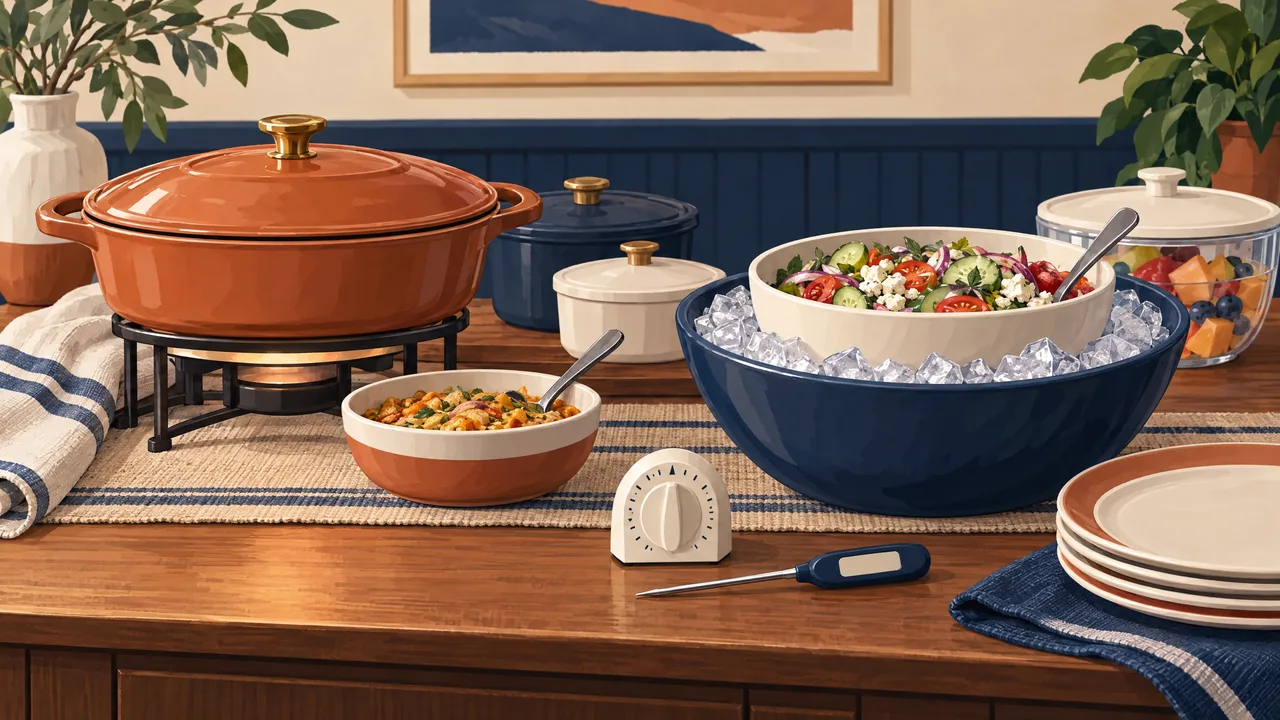
Start with a manageable arrangement: one hot dish, one chilled dish and space to replace both. Leave room in the refrigerator for backup portions and leftovers. Put a serving utensil beside each dish so guests can serve themselves without searching across the counter.
Give hot and cold dishes separate holding plans
USDA's consumer guidance says to keep hot food at 140°F or warmer and cold food at 40°F or colder. Those are food temperatures, not room temperatures or appliance settings.
For the hot dish, use holding equipment capable of maintaining that temperature and check the food with a food thermometer. FDA's home-buffet guidance warns that some warmers hold food only at 110°F–120°F. Check the label rather than assuming any device marked warm is enough.
Keep the chilled dish refrigerated until serving. If it needs to remain on the buffet, nest its dish in a bowl of ice and check that the food stays at 40°F or colder. An ice-filled bowl is a method, not a substitute for measuring the food.
Holding is different from cooking. Put already safely cooked food into hot holding. If you are reheating refrigerated cooked leftovers for the party, USDA says to bring them to 165°F, measured with a food thermometer, before keeping them hot.
Refill by replacing the dish
FDA recommends preparing small platters or dishes and replacing them throughout the gathering. Keep cold backups in the refrigerator and hot backups at 140°F or warmer until needed. This lets you serve late arrivals without leaving the whole batch on the counter.
Do not pour fresh food onto what remains in a serving dish. FDA advises replacing nearly empty dishes with freshly filled ones instead. Keep the replacement dish ready so changing it does not become another kitchen project while guests wait.
Set the clock when temperature control ends
For perishable food left at room temperature, FDA says to discard it after more than two hours, unless it is being kept hot or cold. If the surrounding temperature is above 90°F, that limit is one hour. The exception means maintaining food at the holding temperatures above, not simply switching on a warmer or adding ice.
- Write down when each perishable dish leaves refrigeration or proper hot holding.
- Set a reminder before its applicable limit so you can refrigerate it promptly or remove it.
- Discard food that has exceeded the limit; putting it back in the refrigerator is not a way to extend it.
Make leftover storage part of the setup
Have shallow containers ready before guests arrive. USDA's leftovers guidance recommends dividing large amounts into shallow containers for quicker cooling. Hot food can go directly into the refrigerator; do not wait for it to cool on the counter.
Pack and refrigerate eligible leftovers promptly within the applicable time limit. Clear away dishes that have finished their serving window rather than leaving them available until the last guest leaves. A small buffet works best when each batch has a holding plan, a serving window and a place to go afterward.
Related Posts

Holiday Lights in a Home Bar: Check the Label and Keep Cords Clear
Set up holiday lights around a home bar by checking labels and load limits, inspecting cords, planning a dry route clear of foot traffic and making shutoff easy.
11/21/2026
Unexpected Package Text? Check the Order Without Using the Link
An unexpected delivery text is not proof of a gift-order problem. Check the actual order independently, recognize redelivery-fee traps and know what to do next.
11/21/2026
Holiday Gift-Wrap Cleanup: What to Save and How to Sort
Plan wrapping and cleanup together: save usable supplies, separate paper from coatings and decorations, and check local rules for tissue and gift boxes.
11/20/2026
Holiday Decor Around Pets: Check What They Can Reach
Review holiday decor from your pet's reach: leave out tinsel, collect ribbons, keep cords and ornaments inaccessible, and secure the tree before celebrating.
11/19/2026