
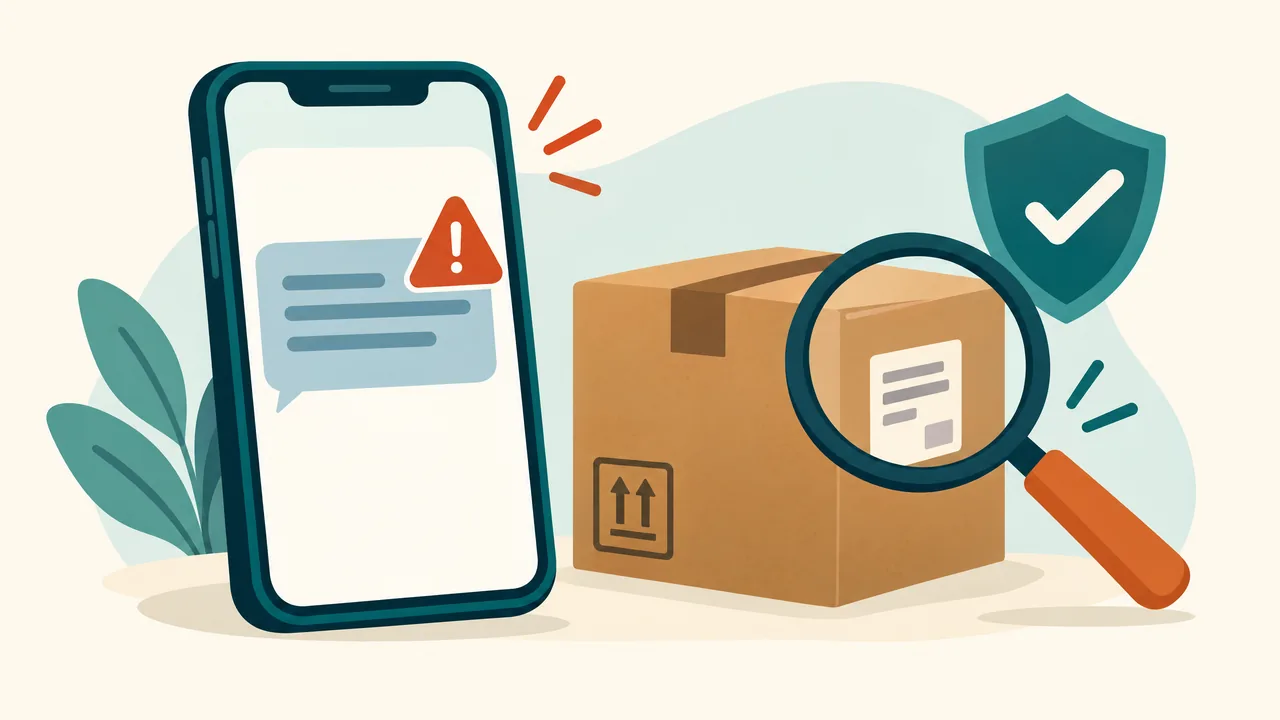
Unexpected Package Text? Check the Order Without Using the Link
An unexpected text says a gift package cannot be delivered until you correct an address or pay for another attempt. Do not use its link to find out whether the problem is real. Check the order through an account or carrier website you open yourself.
Expecting several gifts does not authenticate a message. The FTC's shipping-notification guidance describes fake texts about missed deliveries, shipping updates and packages supposedly about to be returned. Their purpose is to get you onto a look-alike website that collects personal or financial information.
Start with the purchase, not the text
Leave the message alone while you check. Do not reply, call a number supplied in it or enter an address to see what happens. The FTC recommends looking up a recent purchase on the site where you bought it, or contacting the shipping company through a website or number you know is real.
- Open the actual order. Use the retailer's app, a saved bookmark or its known website address. Find the gift in your order history and read the shipping status there.
- Identify the shipment. Compare the order's carrier, tracking number and destination with your gift-shopping notes. If you need carrier tracking, enter that order's number on the carrier's independently opened site—not the text's page.
- Resolve a real issue separately. If the order account or carrier tracking shows a problem, use the support or delivery options reached through that trusted route. If the information is unclear, ask the retailer through its own contact page.
For gifts shipped directly to several recipients, keep a simple list connecting each order to its destination. If someone may have sent you a gift, ask that person through your usual conversation—not by responding to the delivery text. Being unsure which package is involved is a reason to verify, not to hurry.
A small redelivery request can seek much more
The FTC's package-text scam analysis describes small redelivery fees used as a trick to obtain credit-card or even Social Security information. A modest-looking request is not proof that the payment page is legitimate.
For USPS specifically, its Redelivery FAQ says scheduling redelivery is free. Eligible requests can use a tracking number or the barcode on the missed-delivery notice. That does not mean every carrier service or mail-related charge is free; verify any claimed charge independently.
Know the USPS tracking rule
The U.S. Postal Inspection Service's smishing guidance says USPS tracking texts require a customer request for a specific tracking number and do not contain a link. Smishing means phishing through a text message to obtain personal or financial information. Do not generalize that tracking rule to every carrier.
If you already interacted, stop and report
Stop entering information on the linked page. USPIS advises notifying your financial institution if you interacted with the supplied URL, even without pressing submit. Reach your bank or card issuer independently and explain what happened and what you entered.
You can forward the suspicious text to 7726, which helps your wireless provider identify similar messages. For USPS impersonation, follow the postal reporting instructions, which request the message, sender details and any interaction or loss. Preserve that evidence without opening the link, then delete the text. Continue checking your gift through the real order record.
Related Posts

Holiday Lights in a Home Bar: Check the Label and Keep Cords Clear
Set up holiday lights around a home bar by checking labels and load limits, inspecting cords, planning a dry route clear of foot traffic and making shutoff easy.
11/21/2026

Party Buffet Food Safety: Small Batches, Clear Time Limits
Arrange a small party buffet with measured hot and cold holding, fresh replacement dishes, room-temperature time limits and a prompt plan for leftovers.
11/20/2026

Holiday Gift-Wrap Cleanup: What to Save and How to Sort
Plan wrapping and cleanup together: save usable supplies, separate paper from coatings and decorations, and check local rules for tissue and gift boxes.
11/20/2026
Holiday Decor Around Pets: Check What They Can Reach
Review holiday decor from your pet's reach: leave out tinsel, collect ribbons, keep cords and ornaments inaccessible, and secure the tree before celebrating.
11/19/2026